
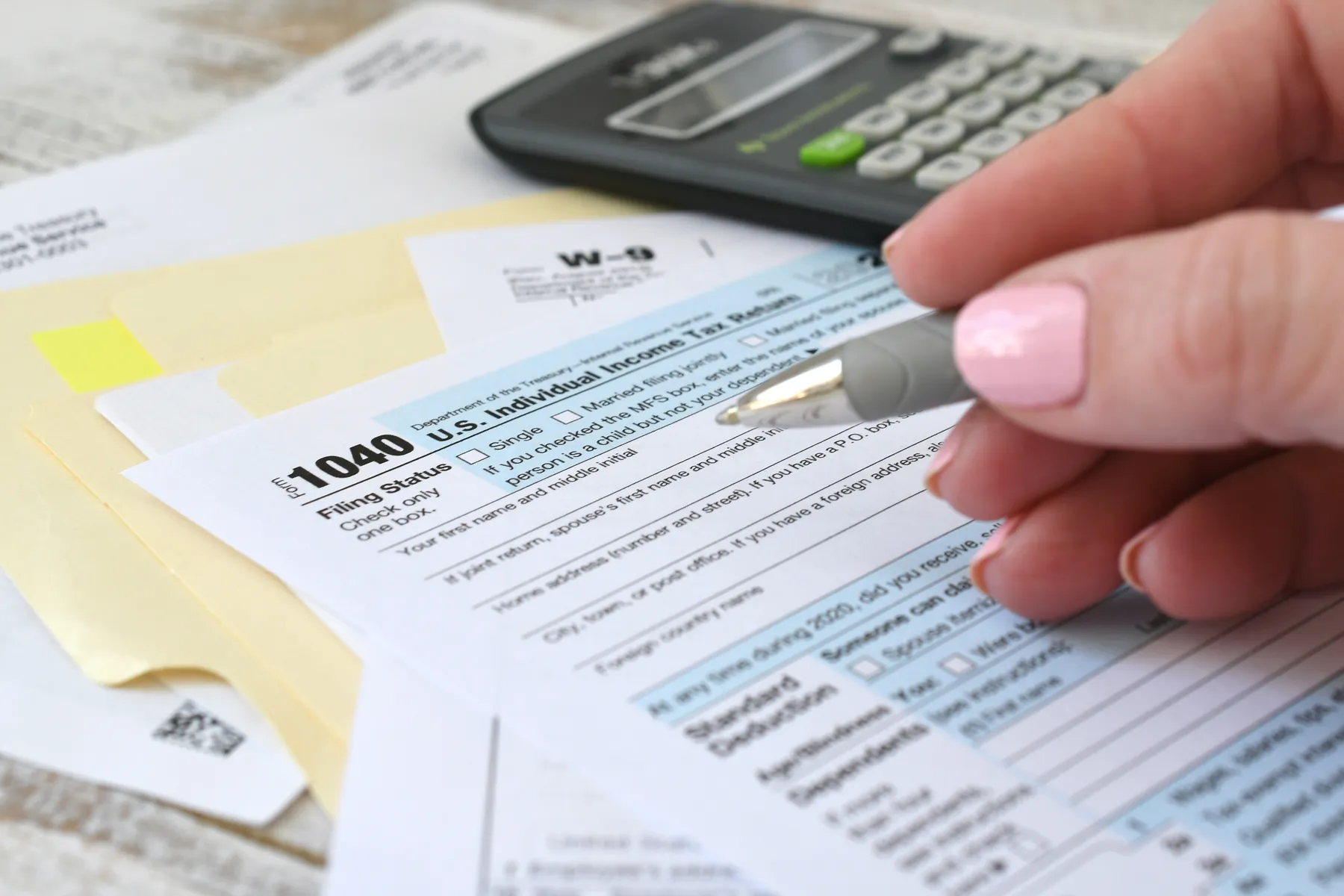
Two layers: the books and the documents behind them
The IRS lets you choose any recordkeeping system suited to your business, provided it clearly shows income and expenses. It describes two layers. The first is a summary of transactions in your business books, whether a ledger or accounting software. For most small businesses, the IRS notes, the business checking account is the main source for those entries.
The second layer is the supporting documents: sales slips, paid bills, invoices, receipts, deposit slips and canceled checks. These are what prove the entries in the books, and in turn the figures on the return. Electronic records are held to the same standard as paper ones.
This page is about documenting expenses, not about which expenses are deductible. Whether a particular cost qualifies depends on the facts and the rules for that type of expense.
What a supporting document needs to show
For both purchases and expenses, the IRS says your supporting documents should identify five things. A single receipt often does not show them all, and the IRS notes that a combination of documents may be needed to substantiate every element.
- The payee: who was paid
- The amount paid
- Proof of payment, such as a canceled check, card statement or electronic transfer record
- The date the expense was incurred
- A description of the item or service that shows it was for the business
Why a bank or card statement alone is usually not enough
A statement line proves that money left the account and where it went. It rarely shows what was bought. A $300 charge at a big-box store could be printer toner or a birthday present, and the statement cannot tell them apart.
The usual fix is simple: keep the itemized receipt or invoice alongside the statement, and add a word about the business purpose where it is not obvious. The receipt covers the description; the statement covers proof of payment. Together they answer the questions a single document leaves open.
Travel, meals, gifts and vehicles need more
Some expenses carry stricter substantiation rules. IRS Publication 463 covers travel, gifts and car expenses, and it asks for adequate records or sufficient evidence to support your own statement. In the IRS's words, you should keep the proof in an account book, diary, log, statement of expense, trip sheets or similar record, together with documentary evidence that supports each element of the expense.
The record generally has to be written, because written evidence is more reliable than oral evidence alone, and a record kept on a computer counts. Publication 463 also lists exceptions where documentary evidence is not needed, including an expense other than lodging of less than $75. The written record of the expense is still expected.
- Vehicle: a log of business trips with date, destination, purpose and miles, plus total miles for the year
- Travel: dates away, destination and business purpose, with lodging receipts
- Business meals: who attended, their business relationship to you and the business purpose, with the receipt
- Gifts: the recipient, the business relationship and the cost
For 2025, Publication 463 gives the business standard mileage rate as 70 cents per mile. The rate changes; check the IRS figure for the year you are claiming. Whichever method you use, the mileage log is the core record.
Assets need a record that lasts longer
Equipment, vehicles, furniture and other assets you depreciate or expense need their own file, because the figures matter each year you claim depreciation and again when you sell or dispose of the asset. The IRS lists what the records should show.
- When and how you acquired the asset, and the purchase price
- The cost of any improvements
- Any Section 179 deduction and depreciation deductions taken
- Casualty losses claimed, such as from fire or storms
- How you used the asset
- When and how you disposed of it, the selling price and the expenses of sale
Massachusetts does not follow the federal bonus depreciation rules and, for tax years 2025 and 2026, recalculates Section 179 without the 2025 federal increases. That means the same asset can have different federal and Massachusetts figures, and both need to be tracked.
How long to keep records
The IRS ties record retention to the period during which a return can be examined or amended. The general rule is three years, but several situations extend it, and employment tax records have their own rule.
| Situation | Keep records for |
|---|---|
| Most returns, where none of the situations below apply | 3 years |
| You file a claim for credit or refund after filing | 3 years from filing, or 2 years from paying the tax, whichever is later |
| You claim a loss from worthless securities or a bad debt deduction | 7 years |
| You did not report income that is more than 25% of the gross income shown on the return | 6 years |
| You did not file a return, or filed a fraudulent return | Indefinitely |
| Employment tax records | At least 4 years after the tax is due or paid, whichever is later |
| Records connected to property | Until the period of limitations expires for the year you dispose of the property |
The IRS also reminds owners to check whether insurers, lenders or others require records to be kept longer before discarding them. Keep copies of filed returns as well.
Habits that make documentation routine
Most documentation problems are timing problems. A receipt that is easy to find in the week it was issued is hard to find eleven months later, and the business purpose of a meal is obvious on the day and a guess in the spring. The habits that work are the ones tied to a regular rhythm.
- 1.Pay business expenses from a business account or card, so every transaction has a proof-of-payment record in one place.
- 2.Capture receipts when they are issued, by photo or by forwarding the email, and store them by year and category.
- 3.Add a short business-purpose note to anything that is not self-explanatory, especially meals, travel and gifts.
- 4.Keep a vehicle log as you go rather than rebuilding it at year end.
- 5.At each month-end, match receipts to the transactions in the books and chase anything missing while it is still fresh.
- 6.Start a file for each new asset on the day it is bought.
When the records are already behind
If a year has passed without much documentation, the first step is not to give up on the expenses. Bank and card statements, vendor account histories and email confirmations can usually rebuild much of the picture, and the IRS recognizes that records may be incomplete in some circumstances. What cannot be recovered should not be guessed at.
Catching the books up before the return is prepared is almost always faster than trying to do both at once. Our catch-up bookkeeping readiness checklist sets out what to gather first.
Where we come in
We keep monthly books with the supporting documents matched to them, reconcile accounts so gaps show up while they can still be fixed, and prepare returns from records that stand up. Where books are behind, catch-up work is scoped separately. We give you a scope and a price in writing before anything starts.
Figures on this page were checked against the IRS and Massachusetts sources listed alongside on 28 Sep 2026. They change — confirm the current amount before relying on one.
General information for owner-led businesses, not advice for your specific situation. Tax and accounting rules change, and how they apply depends on facts particular to your business. Talk to us — or to another qualified professional — before acting on anything here.